Best Cedar Shingles by Grade, Exposure and Coverage
Five 18-inch cedar shingle listings compared on grade, coverage per carton and exposure. Which one suits a sidewall, which suits a shed, and which two say plainly they are not for roofs.
The best cedar shingles here are the Pacific Coast Western Red Cedar 18" Resquared & Rebutted, because trimmed edges and a machine-grooved face give you straight courses on a half square carton weighing 29 lb. If the wall is getting painted, the primed Miller Shingle 18 Inch Rebutted and Rejointed carton covers 50 sq ft at 14 inch exposure and saves you a coat. Grade is what splits this field, not species. All five are western red cedar. Only some are cut to hold a line.
Best cedar shingles at a glance
| Pick | Grade / cut | Stated coverage | Price |
|---|---|---|---|
| Best overall Pacific Coast Western Red Cedar 18" Resquared & Rebutted |
R&R, grooved face 29 lb carton |
1/2 square carton | Check Price |
| Runner-up Miller Shingle 18 Inch Rebutted and Rejointed |
R&R, primed 30 lb carton |
50 sq ft at 14" exposure | Check Price |
| Best for beginners 18" #1 Perfections Western Red Cedar Shingles |
#1 Perfections, CVG Certi-Grade claim |
25 sq ft at 5-1/2" exposure | Check Price |
| Best for heavy use Briwooody 64 Pcs Western Red Cedar Shingles Chip |
Fixed 5.8" width 0.63 in butt |
64 pieces per pack | Check Price |
| Best budget pick Miller Shingle 18" #4 Undercourse Cedar Kiln Dried |
#4 utility undercourse 250 count |
100 sq ft at 14" exposure | Check Price |
How I screened these cedar shingles down to five
I sorted this set by the buyer, not by the spec sheet, because five 18-inch western red cedar listings can look identical until you ask who is holding the hammer.
Four buyer profiles came out of the data:
- The sidewall renovator. Wants courses that read as straight lines from the kerb. Needs R&R shingles, where the edges have been trimmed parallel and the butts squared.
- The painter. Plans a solid stain or paint finish and would rather not prime on a ladder.
- The small-project first-timer. A porch gable, an entry surround, a feature panel. Wants a small carton and a forgiving grade.
- The shed-and-outbuilding owner. Wants pieces that go up fast on something functional.
The fifth profile is the one nobody plans for: the person who needs the hidden layer under a double-coursed wall. That gets its own pick, because buying a premium grade for a course nobody will ever see is money on the floor.
Anything not sold as a cedar shingle was out. Cedar shakes, split rather than sawn, behave differently on a wall and belong in a separate comparison.
Why exposure decides coverage more than carton size
This is the part that trips up first orders. Two of these listings are described as a 1/2 square carton, and one is a full square. That number alone tells you almost nothing about how much wall you will cover.
Exposure is the amount of each shingle left visible after the next course laps over it. Set a shingle at 14 inch exposure and you cover a lot of wall per piece. Set the same shingle at 5-1/2 inches and you cover a fraction of it.
Miller's #4 undercourse listing spells the maths out: 100 square feet at 14 inch exposure, 50 square feet at 7 inch exposure. Same carton, half the wall. Miller's R&R carton claims 50 sq ft at 14 inch exposure double coursed, and 28.5 sq ft at 8 inch exposure single coursed.
The #1 Perfections listing quotes roughly 25 square feet per carton at a standard 5-1/2 inch exposure. That is not a smaller carton so much as a tighter, more weather-tolerant layup.
So before you order anything, decide the exposure. Then read the coverage line. A single figure with no exposure attached is not a coverage figure at all.
1. Pacific Coast Western Red Cedar 18" Resquared & Rebutted — Best overall
Trimmed edges plus a grooved face make this the pick when the finished wall has to look deliberate.

Best for: a sidewall job where courses must line up straight Skip it if: you need shingles for a roof deck
Resquared and rebutted is the whole argument here. Pacific Coast says the shingles are machine-trimmed so the side edges run parallel and the butt is square, which is what lets you snap a line and set a course against it without shimming every third piece. On a raw, natural shingle straight off the saw, the edges wander. On this one, per the listing, they don't.
The second differentiator is the face. Pacific Coast describes a machine-grooved texture for shadowing, which is the deep vertical striping you see on coastal shingle walls. Of the five picks, this is the only one that combines the grooved face with the R&R cut.
The carton weighs 29 lb across 18 x 18 x 3 in and covers a half square. Pacific Coast states kiln drying for stability and reduced warping. The colour is raw and natural, so you can stain it, oil it, or leave it to silver.
The trade-off is position. This is the most expensive pick here, and the listing is explicit that it is for sidewall siding only, not roofing. Only one seller lists it, and it is the slowest mover of the three cartons aimed at real wall square footage.
Pros:
- R&R cut for parallel edges and squared butts
- Machine-grooved face for visible shadow lines
- Kiln-dried, per the manufacturer
- Raw natural colour takes any stain
- 29 lb half square carton, easy two-hand lift
Cons:
- Most expensive pick in this set
- Sidewall only, ruled out for roofs by the listing
- Only one seller stocks it
- No coverage figure tied to a stated exposure
- No published warranty
2. Miller Shingle 18 Inch Rebutted and Rejointed — Runner-up
The only pick that arrives primed, which is a coat you don't have to roll on a wall.
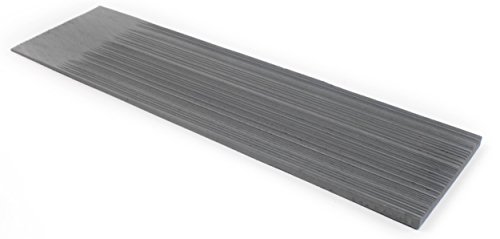
Best for: someone planning to paint or stain the finished wall Skip it if: you want the raw cedar grain left visible
Miller Shingle gives you the same rebutted and rejointed cut as the winner, plus a primed finish. That matters more than it sounds. Priming shingles after they are on the wall means working the edges and the butt lines with a brush. Priming happens at the mill here instead.
The coverage figures are the clearest in this set. Miller states 50 sq ft at 14 inch exposure double coursed, and 28.5 sq ft at 8 inch exposure single coursed, from a half square carton. Two exposures, two numbers, no guessing. The carton weighs 30 lb across a count of 15, and Miller says it is made in Granite Falls, Washington.
Grooving is stated on this listing too, so you get the shadow texture under the primer. This is the pick that sells fastest of the five, which tells you something about how often sidewall buyers want a paint-ready surface.
Where it loses to the winner is finish flexibility. Primed cedar is committed to a topcoat. If you wanted the wood to weather to grey, or to take a semi-transparent oil, you have bought the wrong carton. It also sits in the same premium price territory as the Pacific Coast pick.
Pros:
- Arrives primed, saving a coat on the wall
- Two coverage figures with exposures stated
- R&R cut for straight course lines
- Grooved face texture per the listing
- Made in Granite Falls, Washington
Cons:
- Primer commits you to painting or solid stain
- Premium price position, same tier as the winner
- Only one seller lists it
- Count of 15 is low for a large elevation
- No stated warranty
3. "N/A" 18" #1 Perfections Western Red Cedar Shingles — Best for beginners
A #1 grade carton sized small enough that a first mistake costs you a corner, not a wall.

Best for: a first-timer working on a small, visible feature wall Skip it if: you need a lot of square footage quickly
This is the highest stated grade in the set. The listing describes #1 Perfections in clear vertical grain, and claims grading and certification by the Cedar Shake & Shingle Bureau under Certi-Grade. Clear vertical grain means the growth rings run roughly perpendicular to the face, which is the orientation that resists cupping and takes a nail near the edge without splitting off.
For a beginner, that forgiveness is the point. Straight grain and accurate sawing mean fewer pieces cracked at the nail, fewer offcuts, and a course that sits flat on the first attempt. The listing quotes roughly 25 sq ft of coverage per carton at 5-1/2 inch exposure, and says the shingles are kiln dried and US milled. Model 181PC, colour listed as natural cedar with organic colour variation.
Note the 5-1/2 inch exposure in that coverage claim. That is a tight layup, close to roof practice, and it is why the coverage number is the smallest of the picks that quote one.
Two real drawbacks. The brand field on this listing is blank, so you have no maker to call. And a carton covering about 25 square feet is a slow way to clad a long elevation. This is the slowest-selling pick of the five.
Pros:
- #1 Perfections, highest stated grade here
- Clear vertical grain resists cupping and splitting
- Certi-Grade certification claimed by the listing
- Kiln dried, US milled per the seller
- Coverage stated at a specific 5-1/2" exposure
Cons:
- No brand named on the listing
- About 25 sq ft per carton, smallest quoted coverage
- Slowest seller of the five picks
- Sits mid-range in price for a small carton
- Only one seller stocks it
4. Briwooody 64 Pcs Western Red Cedar Shingles Chip — Best for heavy use
Fixed-width pieces you can lay on a shed roof without recutting every third one.

Best for: sheds, garages, wells and decorative patch jobs Skip it if: you need uniform width across a long wall
Briwooody is the odd one out, and useful for it. Every piece is the same size: 18 in long, 5.8 in wide, 0.63 in thick at the butt and tapering from there. The other cedar shingle picks arrive in random widths, which is authentic but means constant fitting. Here, 64 identical pieces go up in a rhythm.
The listing is also the only one in this set that names roofing among its uses, alongside house restorations, decorative wells, garages, sheds, warehouses and cellar doors. Two of the other picks state flatly that they are not for roofs. Briwooody says the cedar resists moisture, decay and pests, and claims insulation and soundproofing benefits.
Colour is listed as reddish-brown, warmer than the raw stock in the other picks. Two sellers list it, the only pick in this set with more than one.
The catch is scale and grade. There is no square-foot coverage figure and no grade designation, so you cannot estimate a wall from it the way you can from Miller's cartons. At 5.8 inches wide, 64 pieces do not go far on a house. And uniform width, on a real sidewall, reads as a pattern rather than as cedar.
Pros:
- Fixed 5.8 in width, no fitting between pieces
- 0.63 in butt thickness stated
- Only pick whose listing names roofing use
- Two sellers stock it
- Cheapest but one in this set
Cons:
- No grade designation published
- No square-foot coverage figure to estimate from
- 64 pieces cover very little wall
- Uniform width looks mechanical on a large elevation
- No stated warranty
5. Miller Shingle 18" #4 Undercourse Cedar Kiln Dried — Best budget pick
The layer nobody sees, at 250 shingles and 100 square feet of coverage per carton.

Best for: the hidden under-course beneath a double-coursed wall Skip it if: the shingle will be visible when the job is done
Double coursing means two layers per course: a cheap utility shingle underneath, a good one lapped over it. The under-layer never shows. Paying a premium grade price for it is waste, and this carton is the answer.
Miller describes it as utility grade for under coursing of double coursed sidewalls and for starter shingles. Count is 250, colour natural, size 18 inches, kiln dried. Coverage is stated at two exposures: 100 square feet at 14 inch, 50 square feet at 7 inch. That full square carton is the largest coverage figure anywhere in this set, and it is also the cheapest pick of the five. Miller states US manufacture.
Read the restriction carefully. The listing says it is not recommended for roofing, and specifically not as a starter course for roofs, even though it is fine as a wall starter. Those are different jobs.
The weakness is simply what utility grade is. Expect knots, variable width and a face you would not want exposed. There is no published weight either, which matters when you are shifting 250 shingles up a ladder.
Pros:
- Cheapest pick in this set
- 250 shingles per carton
- 100 sq ft at 14" exposure, largest coverage here
- Coverage quoted at two exposures
- Kiln dried, US made per the listing
Cons:
- Utility grade, not for exposed faces
- Ruled out for roofs and roof starter courses
- No carton weight published
- Useless on its own, needs a finish course over it
- Single seller listing
Which of the best cedar shingles can go on a roof?
Read the listings, not the category. All five sit under Roofing > Shingles & Shakes, and three of them narrow that down themselves.
- Pacific Coast R&R: the listing states sidewall siding applications only, not for roofing.
- Miller #4 Undercourse: not recommended for roofing, and not as a roof starter course.
- Miller R&R primed: described as specifically designed for sidewall application.
- #1 Perfections: the title names both siding and roofing shingles.
- Briwooody: names roofing among its listed uses.
That leaves two of the best cedar shingles here that their own sellers point at a roof deck. Roof work also brings in slope minimums, underlayment, spaced sheathing and fastener specification, none of which appear in any of these listings. Check your local code and get the exposure right for the pitch before you order. On a wall, a mistake looks wrong. On a roof, it leaks.
Sidewall grades explained: #1, #4 and R&R
Two different labels get mixed up constantly, and knowing which is which saves you from buying the wrong carton twice.
Grade describes the wood. #1 is the top designation, and this set's #1 Perfections listing pairs it with clear vertical grain: no knots on the exposed face, rings running perpendicular to the surface. #4 is utility, at the other end. Knots, flat grain, variable quality, and honest about it.
Cut describes the machining. R&R, rebutted and rejointed, means the edges have been trimmed parallel and the butt squared after sawing. Both Miller's primed carton and the Pacific Coast carton state R&R. Grade tells you about the timber; R&R tells you whether the piece is a rectangle.
That distinction is why the winner beats a higher grade here. A #1 shingle with untrimmed edges still needs fitting. An R&R shingle in a lesser grade goes up in a straight line. For a visible sidewall, geometry wins.
How much cedar do you actually need to order?
Four steps, in this order, before you add anything to a cart.
- Measure the wall in square feet. Length times height, per elevation. Subtract nothing for windows under about 10 square feet; you will use the offcuts.
- Pick your exposure. 14 inches is common for double-coursed sidewall. 8 inches single coursed. Around 5-1/2 inches is a tight, weather-first layup.
- Match the exposure to a stated coverage figure. Miller's #4 carton covers 100 sq ft at 14 inch exposure. Its primed R&R carton covers 50 sq ft at 14 inch, or 28.5 sq ft at 8 inch. The #1 Perfections carton covers about 25 sq ft at 5-1/2 inch.
- Add waste. Corners, rakes, cuts around openings. Order more than the bare arithmetic says.
If you are double coursing, remember you are buying two products: a utility undercourse and a finish course over it. That is two orders, not one, and the undercourse quantity is the one people forget.
The verdict
At the cheapest end of this set, the Miller Shingle 18" #4 Undercourse is not a compromise, it is the correct product for a specific layer. 250 shingles, 100 square feet at 14 inch exposure, and a face nobody will ever see. Buy it alongside a finish course, never instead of one. Briwooody sits nearby on price and does a different job: 64 uniform 5.8 inch pieces for a shed, a garage or a decorative well, on the only listing here that names roofing among its uses.
The middle of this set belongs to the 18" #1 Perfections carton. Clear vertical grain, a Certi-Grade claim, and about 25 square feet at 5-1/2 inch exposure. Small, careful, forgiving on a first attempt, and the grade to pick when a small area will be looked at closely.
At the premium end, both R&R cartons are worth their position, and the split is finish. Pacific Coast's 29 lb grooved carton in raw cedar is the default: stain it, oil it, or let it silver. Miller's primed 30 lb carton wins only if you already know the wall is getting painted, because that factory coat is real labour saved.
FAQ
Are the best cedar shingles worth it over vinyl or fibre cement?
The best cedar shingles are worth it when you want the shadow lines and colour variation the material gives you, and are prepared to maintain them. Every pick here is western red cedar, which the listings describe as naturally resistant to rot, decay and insects when properly installed. Vinyl asks less of you. Cedar looks like nothing else on a wall.
What is the cheapest way to buy cedar shingles for a large wall?
The cheapest way to buy cedar for a large wall is double coursing. Use Miller's #4 utility undercourse for the hidden layer, at 250 shingles and 100 square feet of coverage at 14 inch exposure, then lap a graded finish shingle over it. You pay premium prices only for the wood that shows. Order both cartons together.
How much does a carton of these cedar shingles weigh?
Carton weights are published on two of these picks. The Pacific Coast half square carton is listed at 29 lb, measuring 18 x 18 x 3 in. Miller's primed R&R half square carton is listed at 30 lb with a count of 15. The #1 Perfections and #4 Undercourse listings publish no weight, so plan lifting help for those.
Pacific Coast R&R or Miller primed R&R: which should I buy?
Between Pacific Coast R&R and Miller primed R&R, the finish decides it. Both are rebutted and rejointed with a grooved face, and both sit at the top of this price set. Pacific Coast ships raw natural cedar, so you can stain, oil or weather it. Miller ships primed, which saves a coat but commits you to paint.
What mistake do first-time cedar shingle buyers make?
The mistake first-time cedar shingle buyers make is ordering by carton size instead of by exposure. A half square carton covers 50 square feet at 14 inch exposure and only 28.5 square feet at 8 inch. Same box, very different wall. Decide the exposure first, read the coverage figure tied to it, then add waste for cuts.
Start by measuring one elevation and settling on an exposure, because that single decision changes how many cartons you need more than anything else on these listings. Then order the Pacific Coast R&R carton for the visible courses. Its trimmed edges and squared butts are what turn a wall of individual shingles into a set of straight lines you can see from the street, and the raw natural face leaves every finish option open until the wood is already up. If the wall is going to be painted anyway, switch to Miller's primed carton and pocket the coat.
Last updated: September 7, 2026. Product availability re-checked.
This page contains affiliate links. As an Amazon Associate we earn from qualifying purchases, at no extra cost to you.